
Conservation scientists are preparing to launch a specialized wildlife monitoring study along a heavily traveled corridor in the Mojave Desert to assess how native animals navigate the landscape. The Wildlands Network recently announced the research initiative, which will focus on a key stretch of State Route 62 situated between Palm Springs and Yucca Valley, just east of the Victor Valley.
The primary objective of the field study is to gather baseline ecological data ahead of the construction of two major wildlife crossings spanning the highway. By tracking animal movement patterns prior to ground disturbance, researchers aim to optimize the placement and functionality of the proposed structures, ensuring they effectively serve the desert's diverse fauna.
A primary focus of the non-invasive research will be monitoring high-profile desert species whose survival depends on large, connected home ranges. Field crews will dedicate their efforts to collecting vital biological data on regional populations of mountain lions, bobcats, and desert bighorn sheep, all of which face severe challenges when attempting to traverse the busy highway corridor.
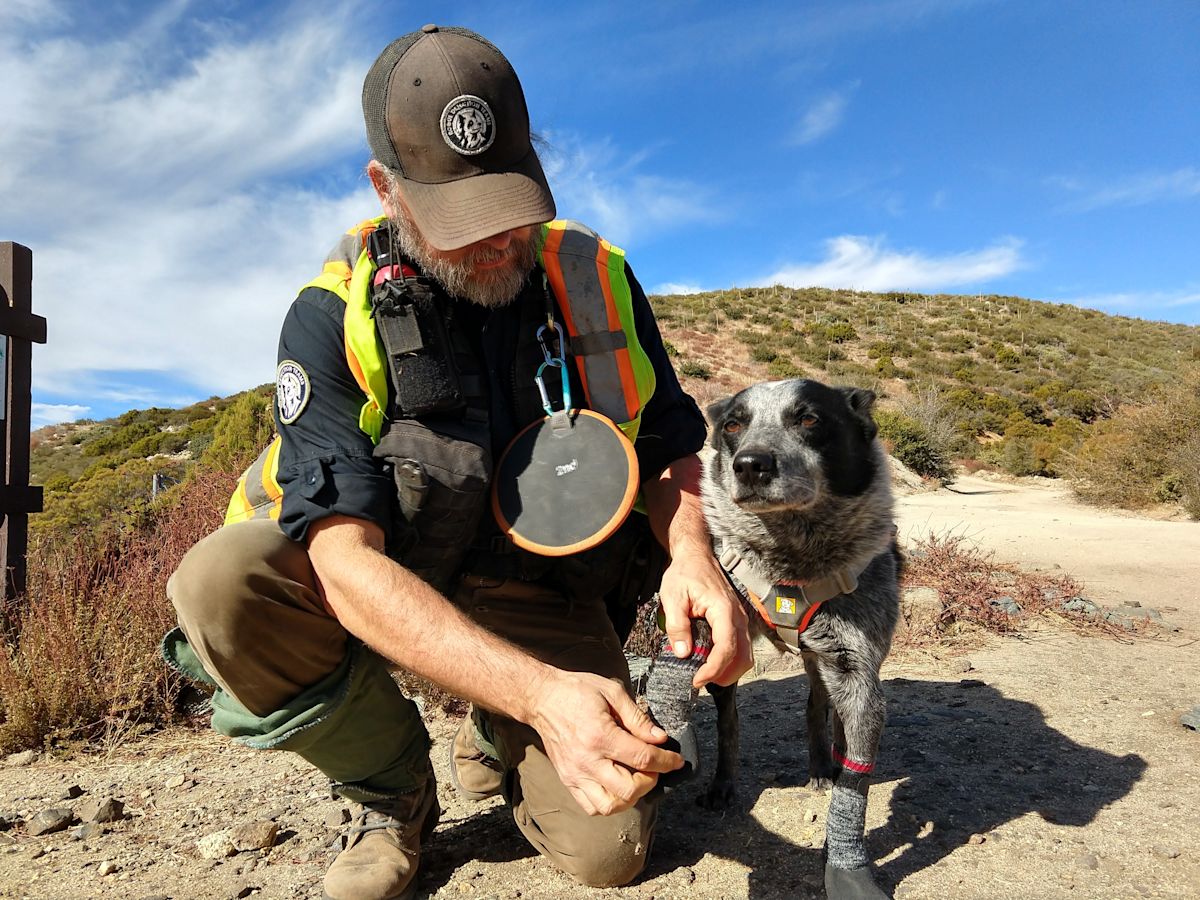
To conduct these evaluations without capturing or stressing local fauna, researchers are implementing non-invasive detection techniques. Specially trained rescue dogs working in tandem with experienced field biologists will be deployed across the desert terrain to identify physical evidence left behind by passing wildlife.
The detection strategy relies heavily on the canine teams' acute sense of smell to locate scat, or fecal droppings, from elusive carnivores like mountain lions and bobcats. Field biologists accompanying the scent dogs will evaluate wildlife signs and behavioral indicators across the rugged topography, ensuring comprehensive coverage of potential transit corridors adjacent to the roadway.
In parallel with the predator tracking teams, a specialized crew of researchers will focus on finding and documenting bighorn sheep scat. This dedicated group brings years of specialized background in studying desert bighorn genetics, habitat utilization, and herd movements across the unique environmental conditions of the Mojave Desert.
Once biological specimens are collected from the field, they will be transported to specialized laboratories for rigorous genetic testing. Scientists will extract DNA from the scat samples to identify individual animals, map their distribution, and evaluate the current degree of genetic exchange taking place across the State Route 62 barrier.
The field research is structured around a precise operational schedule to maximize data collection during optimal morning hours. Specialized bighorn sheep surveys are scheduled to take place on September 25 between 9 a.m. and noon, while the Rogue Detection Teams and their trained scent dogs will conduct their searches on October 6 during the same three-hour morning timeframe.
Conservationists emphasize that roadways like State Route 62 act as severe artificial barriers that bisect natural habitats and restrict vital ecological connectivity. When animal populations become isolated on opposite sides of high-speed transit routes, they face increased risks of genetic degradation, including inbreeding and a heightened susceptibility to communicable wildlife diseases.
The need for interventions along State Route 62 has grown increasingly urgent over the past decade due to substantial increases in regional traffic volume. Transportation pressure has steadily mounted as a result of ongoing residential population growth in the Morongo Basin, combined with a threefold increase in annual tourist visitation to neighboring Joshua Tree National Park.
Mounting vehicular traffic has had a devastating impact on local wildlife populations attempting to cross the busy thoroughfare. High mortality rates have been recorded along critical segments of the highway, particularly around the Morongo and Yucca grades, where multiple animal deaths—including mountain lions, black bears, deer, and bighorn sheep—were documented within a single year.
To mitigate these hazards, planners have designed two dedicated overpasses positioned at the most perilous grade locations along the highway. These structures are engineered with a natural earthen foundation and will be densely revegetated with native plant species identical to the flora found in the surrounding natural desert landscapes.
The crossing designs incorporate additional protective measures aimed at ensuring wildlife actually utilize the overpasses safely. Continuous directional fencing will be erected along both sides of State Route 62 to guide animals away from traffic lanes toward the overpass entrances, accompanied by specialized engineering features designed to buffer highway noise and vehicle headlight glare.
Beyond protecting native biodiversity, the overpass initiative is expected to substantially enhance public safety for thousands of motorists traveling through the region. Reducing wildlife-vehicle collisions along this busy arterial route addresses a major public hazard, creating a safer travel corridor for drivers while restoring vital ecological pathways for desert wildlife.
The planning phase and long-term wildlife monitoring partnership are supported by dedicated conservation funding sources. The project has secured grant allocations from both the Wildlife Conservation Board and the Coachella Valley Mountains Conservancy to spearhead the pre-construction planning efforts.
By establishing an empirical baseline of wildlife movements and genetics before construction begins, researchers will be equipped to evaluate the success of the overpasses long after they are built. The data gathered during the upcoming surveys will serve as a permanent benchmark to measure how effectively the crossings restore connectivity across the desert landscape.





(0)