
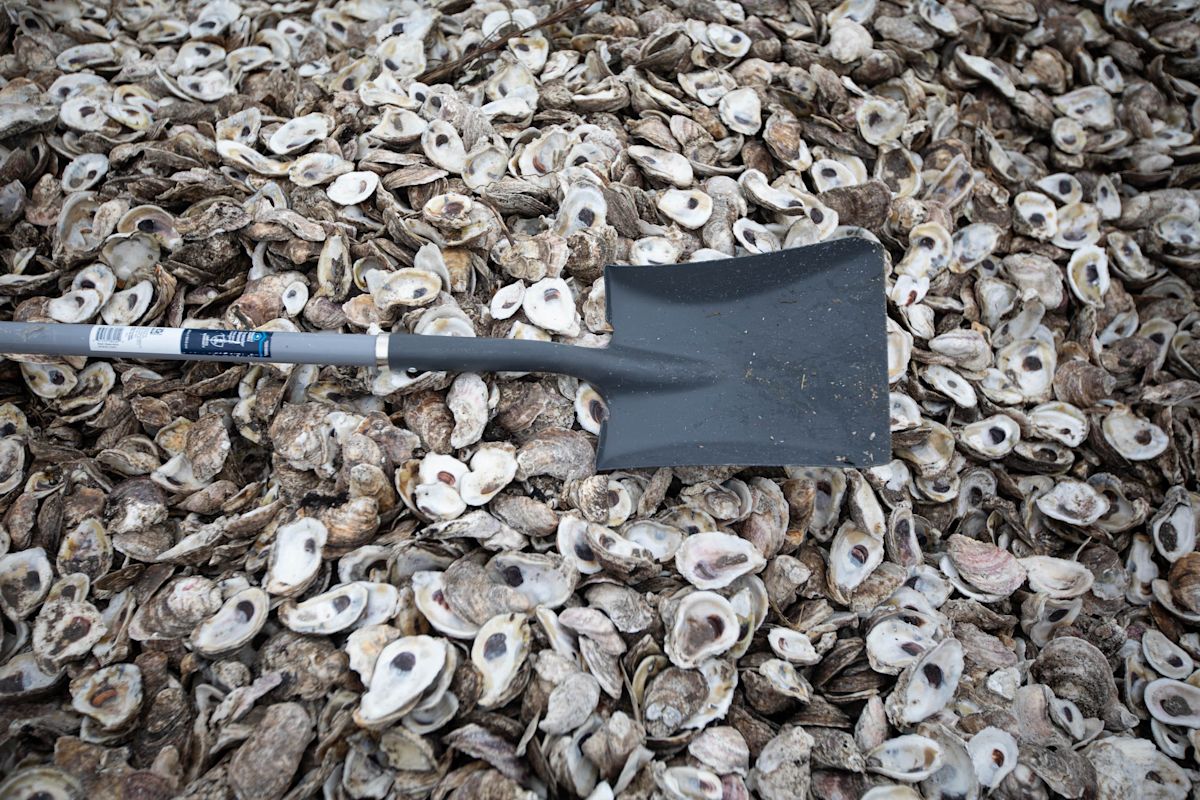
For seafood enthusiasts dining hundreds of miles from the coastline, ordering a platter of freshly shucked oysters is one of the most direct ways to savor the ocean. Yet, behind the popular culinary delicacy lies an overlooked environmental dilemma. When oysters are harvested, their sturdy outer shells are permanently removed from coastal waters and frequently discarded directly into municipal landfills, depriving marine habitats of the exact materials required to sustain future populations.
A major coastal conservation initiative is working to bridge the distance between inland dining tables and coastal marine environments. The Texas Coastal Bend's long-running oyster shell recycling network has officially widened its geographic footprint, allowing restaurants in San Antonio to systematically divert discarded shells away from landfills and send them back to Texas bays to regenerate degraded reef systems.
The effort is anchored by the Sink Your Shucks Oyster Shell Recycling Program, an initiative based out of Texas A&M University-Corpus Christi’s Harte Research Institute. For years, the program has partnered with local coastal establishments to retrieve shells and rebuild underwater structures, but the latest expansion demonstrates how inland communities can actively support marine conservation.
Recycling these discarded shells is essential to the reproductive and developmental lifecycle of native oysters. Young larval oysters are born without protective shells and spend the first roughly three weeks of life freely swimming through bay waters in search of a hard substrate. Ideally, these free-floating larvae seek out existing oyster shells to anchor themselves, after which they settle and begin constructing their own calcified layers.
When shell material is continuously extracted from estuaries without being replenished, young oysters lose their primary settling grounds. Beyond providing nursery habitats for incoming oyster generations, mature oyster reefs serve as critical natural infrastructure. They act as essential habitats for a wide variety of fish and shellfish, function as natural water filtration systems that clarify coastal waters, and serve as physical barriers that buffer shorelines against erosion.
To extend the program’s geographic reach, Sink Your Shucks established a collaborative partnership with the South Texas Coastal Initiative. This alliance establishes a dedicated logistical pathway to transport discarded shells from San Antonio dining rooms back down to the Gulf Coast.
Conservation coordinators emphasize that geographic proximity to the sea is not a prerequisite for contributing to coastal stewardship. Stephanie Tierce, the program coordinator for Sink Your Shucks, noted that this collaboration proves people do not have to reside directly on the shoreline to exert a positive ecological influence. She explained that an oyster ordered and enjoyed in San Antonio can directly become part of the foundational substrate supporting subsequent generations of oysters in Texas waters, creating a continuous cycle from bay to table and back to the bay.
The San Antonio rollout is already actively collecting shells across several notable establishments. Participating locations include Southerleigh Fine Food & Brewery, Brasserie Mon Chou Chou, and Pullman Market in the historic Pearl District, alongside Little Em's Oyster Bar in the King William historic district.
The logistical transport is supported by Mission Compost, a partner organization that has already successfully gathered more than 5,000 pounds of used oyster shells from these San Antonio venues. The collection network is designed to continually route discarded shells back toward restoration zones instead of municipal waste streams.
Culinary professionals participating in the initiative view shell reclamation as an integral element of responsible kitchen management. Aaron Juvera, chef de cuisine at Southerleigh Fine Food & Brewery, highlighted that collaborating with the South Texas Coastal Initiative and Sink Your Shucks allows the restaurant to finish the full ecological lifecycle for every oyster prepared. He stated that returning shells to the Texas coastline to restore fragile reefs and protect bay environments aligns with the restaurant's ongoing commitment to sustainable operations.
Juvera added that the culinary team aims to support Texas oyster farming holistically, educate both kitchen personnel and restaurant guests about the nuances of local oysters, and ensure that discarded kitchen remnants actively contribute to rebuilding a regenerative coastal ecosystem.
Over its operational history, Sink Your Shucks has successfully reintroduced millions of pounds of recycled shells back into the Mission-Aransas Estuary, including restoration projects across Copano Bay, Aransas Bay, and St. Charles Bay. In June, program volunteers expanded their environmental footprint further south by constructing an oyster reef situated just off Mustang Island in the Upper Laguna Madre.
The newly added San Antonio eateries join an established network of coastal dining partners that actively supply shells to the program. Long-standing participants include Black Diamond Oyster Bar, Castaway's Seafood, Copano's Restaurant, Dai Due, Doc's Seafood and Steaks, Dokyo Dauntaun, Dorado's Restaurant, Fulton Irish Pub, Hometown Seafood, KC's Oyster Shack, Latitude 28°02' Restaurant, Saltwater Grill, The Boiling Pot, Virginia's on the Bay, and Water Street Oyster Bar.
Community involvement remains a fundamental pillar of the restoration initiative. Local students and community volunteers—such as students from the Rockport-Fulton, Flour Bluff, and Corpus Christi independent school districts who have previously shoveled shells at Goose Island State Park—routinely participate in hands-on bay restoration work. The next volunteer-driven community oyster reef restoration event at Goose Island State Park is scheduled for October 3.
Organizers behind the expansion are actively recruiting additional San Antonio restaurants to grow the collection network. Interested restaurant owners and culinary operators seeking to participate in the shell recycling initiative can reach out by email to Eric@Ejdcomp.com to coordinate logistics and assist in restoring Texas reef ecosystems.


(0)