
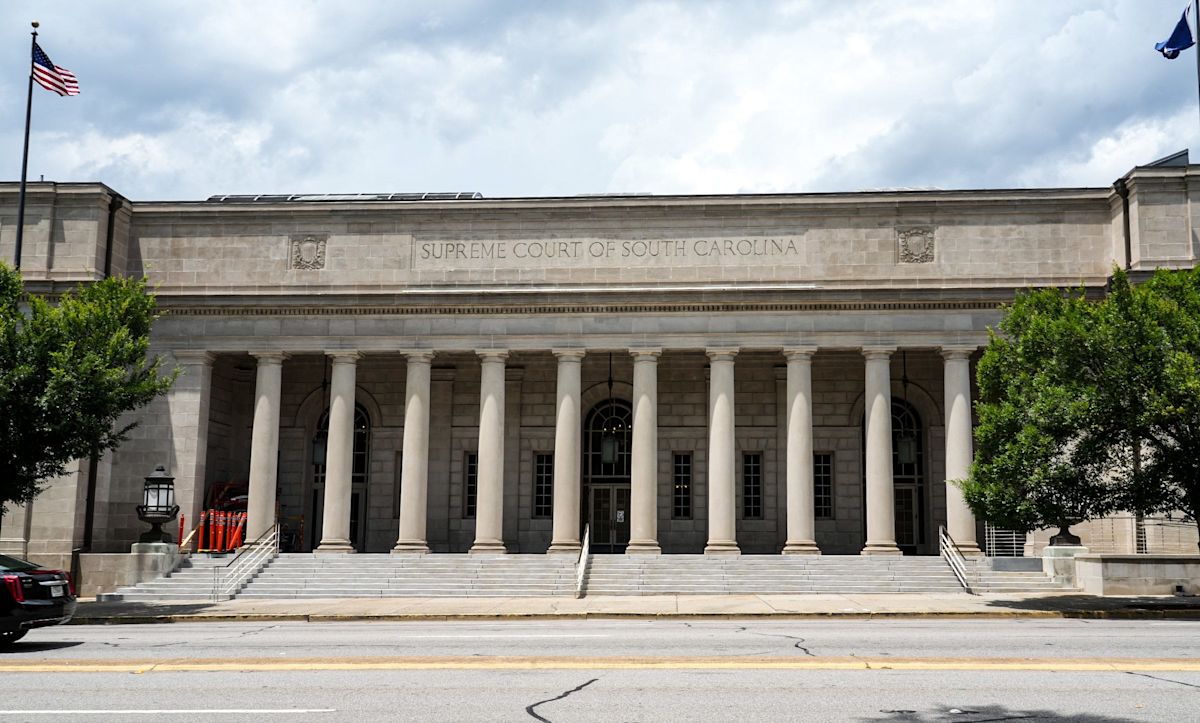
The South Carolina Supreme Court convened on the campus of Clemson University to hear oral arguments in a contentious legal dispute over whether Gov. Henry McMaster possessed the legal authority to deploy members of the South Carolina National Guard to Washington, D.C.
The special two-day court session marks the first time in state history that the highest judicial body in South Carolina has conducted formal proceedings at Clemson University. The travelling session was arranged as part of a broader institutional effort by the court to increase transparency and foster public engagement with the state's legal and judicial system.
University leadership welcomed the high-profile proceeding as a rare educational milestone for both the campus community and local residents. Clemson President Benjamin Ayers emphasized that the open session offered the public and students an invaluable opportunity to observe the mechanics of the justice system up close.
Ayers noted that hosting the proceedings allows university students to bridge academic theory with real-world governance, linking classroom instruction directly to the state leaders and legal institutions shaping South Carolina law. He expressed gratitude to the justices for providing such an accessible forum on campus grounds.
The centerpiece of the opening day's docket was a lawsuit rooted in Gov. McMaster's 2025 order sending state National Guard personnel to the nation's capital. That deployment occurred in coordination with a broader federal initiative spearheaded by President Donald Trump aimed at curbing crime in Washington, D.C.
South Carolina was not alone in mobilizing its military personnel for that mission. Governors from several other conservative states, including Tennessee, Louisiana, and Mississippi, also dispatched their respective National Guard units to assist with security and law enforcement support in the federal district during 2025.
The out-of-state deployment prompted swift legal resistance back home. The South Carolina Public Interest Foundation joined forces with Navy veteran James Weninger to file a formal lawsuit challenging the action, naming McMaster alongside Maj. Gen. Robert B. Stilwell, the adjutant general of the South Carolina National Guard, as defendants.
In their legal filings, the plaintiffs maintained that the governor overstepped his statutory mandate by dispatching guardsmen to Washington, D.C., arguing that activating state military personnel to perform civilian policing duties in another jurisdiction was unlawful under state law.
During the oral arguments, ACLU of South Carolina Legal Director Allen Chaney, representing the plaintiffs, faced probing questions from Chief Justice John Kittredge. The chief justice asked Chaney to address the extent of gubernatorial discretion when determining when and where to mobilize the state's military forces.
Chaney clarified the scope of the legal challenge, stating that the plaintiffs were not asking the justices to assess whether the deployment was a wise or unwise policy decision. Instead, Chaney stressed that the core question before the bench is strictly whether existing state statutes authorize the governor to deploy the Guard to Washington, D.C., under those specific circumstances.
The bench also focused intently on constitutional boundaries and the separation of powers doctrine. Kittredge raised questions about judicial authority, asking whether state courts have the proper jurisdiction to dictate how a sitting governor exercises executive command over the armed forces.
In response to questions regarding the separation of powers, Chaney argued that judicial oversight remains vital, asserting that the state constitution must function as the supreme law of the land and provide meaningful limits on executive authority.
Defending the administration's actions, legal counsel Grayson Lambert argued that McMaster acted entirely within his lawful constitutional purview. Lambert asserted that as the commander in chief of the state's military apparatus, the governor possesses broad and clear authority to order deployments, maintaining that the Washington, D.C., mission fits comfortably within that established executive power.
Following roughly an hour of sharp oral debate between the attorneys and the bench, the justices concluded the session without issuing an immediate ruling. The court took the matter under advisement and will release its formal determination regarding the legality of the deployment at a later date.
The National Guard case was not the only matter before the justices during their Clemson visit. In a subsequent session on Sept. 15, the court turned its attention to a civil dispute involving Thomas Ravenel and Kathryn Dennis, both known for their roles on Bravo's reality television series *Southern Charm*.
The court's Clemson itinerary is scheduled to continue with additional hearings involving distinct legal issues across the state. The upcoming docket includes an Anderson County product liability lawsuit stemming from injuries caused by an exploding lithium battery, as well as a criminal case originating in Horry County regarding a defendant's fundamental right to testify.





(0)