
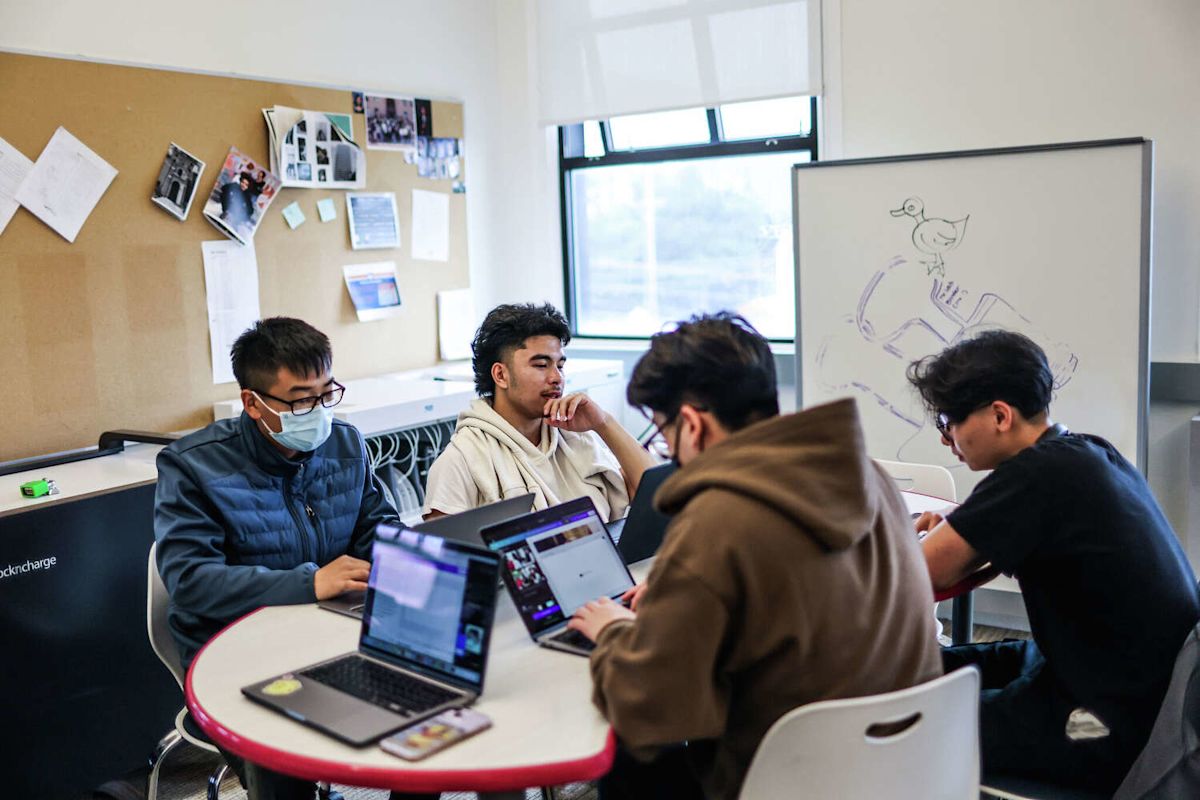
A growing coalition of parents and educators across San Francisco is challenging the integration of digital devices and artificial intelligence in public school classrooms. The resistance centers on software designed to assist early learners, with families raising sharp concerns regarding child development, voice data collection, and the erosion of traditional human instruction in foundational grades.
At the center of the local movement is a petition organized by the grassroots organization Tech In Check San Francisco. As of Tuesday morning, the document had gathered nearly 1,000 signatures from concerned community members, including district parents and teachers, all urging the San Francisco Unified School District to fundamentally reassess its reliance on educational technology.
The petition outlines several decisive policy changes, calling on district leadership to enforce strict caps on daily screen time and eliminate generative artificial intelligence tools across all grade levels. Among the core demands is a complete shutdown of AI-powered chatbots and search engines on student-issued devices, along with an immediate halt to automated software used to teach foundational academic subjects in elementary schools.
Organizers have emphasized that their campaign does not represent a wholesale rejection of modern instructional technology. Instead, the petition argues that digital tools must be deployed with deliberate intention, complete transparency, and only after verifiable evidence proves that they meaningfully advance student comprehension and academic achievement.
The local dispute reflects a widening national skepticism toward educational technology. School districts across the country are grappling with the pervasive presence of digital hardware, spurred in part by California state legislation requiring limits on student mobile device usage, as well as broader calls to implement full classroom moratoriums on advanced generative models such as ChatGPT and Claude.
These grassroots anxieties also mirror wider national debates surrounding the rapid evolution of artificial intelligence. Prominent technology executives from major AI firms recently warned about the risks of uncontrolled model capabilities, urging an intentional deceleration in development to avoid profound and potentially destabilizing societal consequences.
Proponents of the San Francisco petition are urging local administrators to emulate the Los Angeles Unified School District, which recently established formal limits on classroom screen time and enacted a temporary suspension of generative AI. Officials in Los Angeles cited risks regarding the spread of misinformation, academic dishonesty, the loss of independent problem-solving confidence, and the potential for unhealthy emotional attachment to interactive automated programs.
In San Francisco, parent frustration has been exacerbated by a perceived lack of district communication regarding which technological platforms are active inside classrooms. Families are demanding clear, standardized policies governing device usage, tighter controls on social media access, and the formal authority to opt their children out of automated digital instruction.
Much of the neighborhood debate has focused squarely on Amira Learning, a widely deployed reading platform utilized in early elementary classrooms. Parents have taken to community forums and district meetings to express unease over how the software listens to, evaluates, and interacts with young students during core reading periods.
San Francisco Unified currently uses two distinct software products created by Amira Learning. The first tool functions as a mandatory screening instrument for dyslexia, implemented under a recent California state mandate after the state Department of Education designated Amira as an approved diagnostic provider.
The second product is an interactive literacy tutoring application that requires young pupils to read aloud into their computer microphones. As the child speaks, an animated AI-driven character processes the vocal input, intervening in real time to correct pronunciation errors and guide the student through reading exercises.
While independent researchers in Louisiana conducted an assessment of the tutoring software that recorded measurable improvements in student literacy, that study was funded directly by Amira Learning itself. This financial link has drawn scrutiny from parents who question the impartiality of vendor-backed educational research.
Parent Lisa Swan recounted her surprise upon discovering that her daughter had been using the Amira program starting in first grade, an instructional routine that has continued into the second grade without prior disclosure from the school. Swan noted that no informational notices were sent home, arguing that young children in primary grades derive little benefit from mandatory screen-based instruction.
Other district parents, including Lori Ronayne, have warned that adopting automated tutoring normalizes the replacement of human educators with machines during vital transitional years from transitional kindergarten through twelfth grade. Ronayne stressed the absence of long-term developmental studies analyzing how sustained exposure to artificial intelligence alters children's attention spans, mental wellness, and overall cognitive growth.
Privacy and biometric safeguards represent another major point of contention for local families. Critics have raised alarms regarding the continuous recording and analysis of children's spoken words, cautioning that capturing young voices could lead to the unintended compilation and storage of sensitive biometric data.
In response to community pushback, Amira Learning founder and Chief Executive Officer Mark Angel maintained that parental opposition stems from a misunderstanding of his company's technology. Angel emphasized that his platform operates on specialized instructional artificial intelligence rather than large-scale generative models, describing the reading assistant as the conceptual opposite of open-ended conversational chatbots.
Angel further defended the software by comparing both the dyslexia diagnostic screener and the automated reading tutor to responsive video games. He explained that the system operates entirely within structured, predetermined parameters tailored to student input, ensuring that the software reacts to user choices without generating novel or unpredictable synthetic content.


(0)