
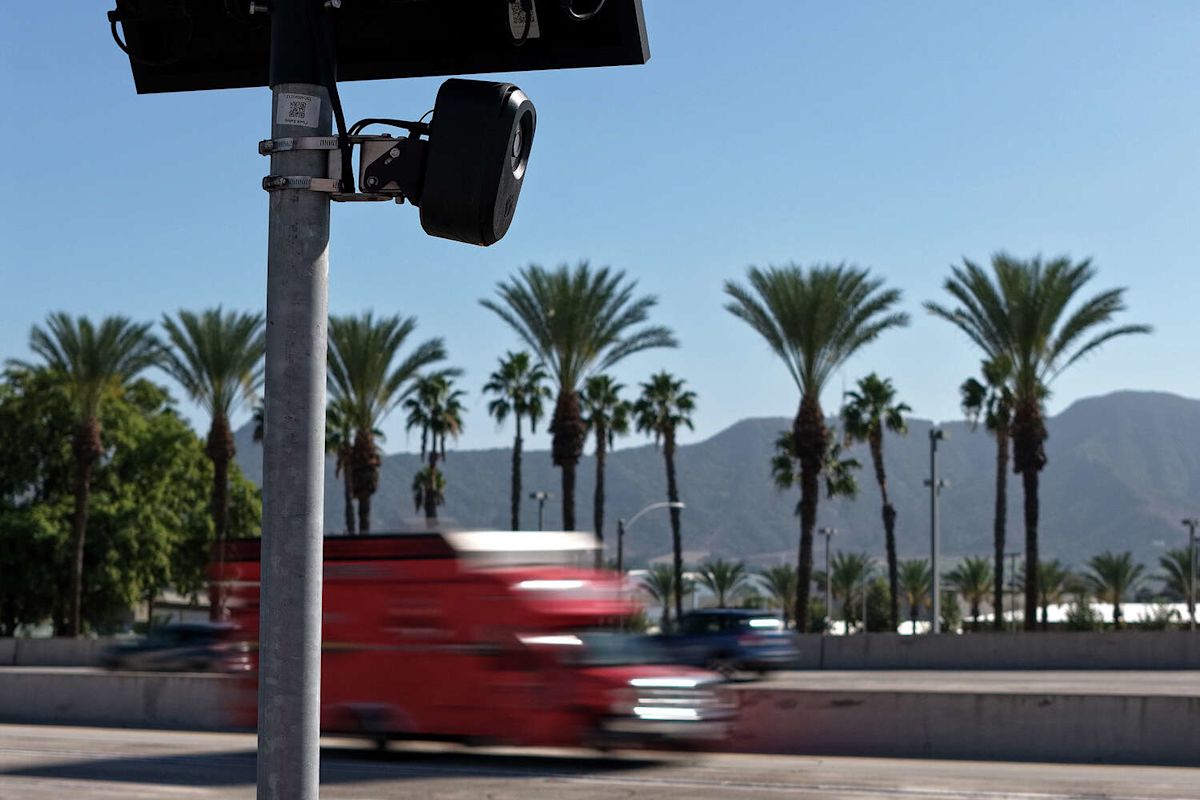
Across Northern California, the debate over municipal automated license plate readers has entered a new phase as local governments reassess their vendor relationships. While several Bay Area communities have sought to distance themselves from prominent camera provider Flock Safety following heightened scrutiny, the shift has largely resulted in transitions to alternative surveillance vendors rather than an abandonment of the technology altogether.
The municipal contract changes come in the wake of an intense period of public pushback from local residents, community activists, and digital privacy organizations. Critics have raised persistent alarms regarding the scope of mass surveillance systems and highlighted reported instances where law enforcement personnel misused database access to monitor individuals without legitimate policing justifications.
In response to sustained public resistance, some municipalities have chosen to dismantle their automated license plate reader programs entirely. Cities such as Santa Cruz and Mountain View responded to local pressure by opting out of automated vehicular tracking hardware, effectively ending their deployment of plate-scanning camera networks.
Other local governments, however, have opted for a different strategy by transferring their automated tracking operations to competing security and tech corporations. Among the vendors competing in this expanding market are Motorola Solutions, Genetec, Rekor, and Axon, the latter of which has increasingly positioned itself as a primary competitor to Flock Safety.
Despite these vendor transitions, civil liberties advocates argue that replacing one camera brand with another does little to address the fundamental constitutional and privacy challenges associated with indiscriminate automated monitoring. The core functionality of these platforms remains virtually unchanged regardless of the corporate entity managing the hardware and software.
Lisa Femia, a staff attorney representing the Electronic Frontier Foundation, emphasized that both Flock and Axon offer products designed around the same fundamental premise. She observed that these systems automatically photograph every passing automobile irrespective of whether the motorist is suspected of wrongdoing, logging precise timestamps, locations, license plate characters, vehicle makes, models, colors, and identifiable features such as bumper stickers.
Femia likened the process of replacing Flock with Axon to swapping Coca-Cola for Pepsi, asserting that changing manufacturers fails to alter the underlying reality of widespread vehicular tracking. In her view, the comprehensive documentation of civilian travel patterns continues unabated regardless of which vendor's logo appears on the camera housing.
Law enforcement agencies, conversely, continue to defend automated license plate recognition as an essential investigative mechanism for modern policing. Police leaders maintain that rapid vehicular data collection plays a critical role in identifying suspects and resolving serious offenses, including armed robberies and active shooting incidents.
During an Antioch City Council session on August 25, police Lt. Michael Mellone addressed the operational value of plate readers, noting that automobiles play a central role in a significant portion of municipal criminal investigations. He explained that when witnesses can only provide partial license numbers, travel directions, or basic vehicle descriptions, the scanning network allows detectives to transform incomplete clues into actionable investigative leads.
To substantiate the practical utility of the technology, Mellone highlighted recent operational outcomes from Antioch's camera deployments. Over the preceding year, the city's existing Flock system assisted officers in tracking down at least 42 stolen automobiles, which directly contributed to 23 criminal arrests.
The political considerations surrounding the technology were evident during the Antioch council's deliberations. Council member Tamisha Torres-Walker recognized the community's reservations regarding mass data collection, privacy risks, and civil liberties, expressing an explicit desire to terminate the city's partnership with Flock.
Nevertheless, Torres-Walker joined the rest of the Antioch City Council members in attendance to approve a transition to a different contractor, voting in favor of a four-year agreement with Axon valued at $660,000. Representatives for Torres-Walker and Axon did not provide comment regarding the contractual shift.
In a similar move, the city of Hayward authorized a significant investment in alternative plate-reading infrastructure, entering into a five-year contract with Axon valued at $2.9 million. Hayward municipal communications officials also did not respond to requests for comment regarding their vendor transition.
The ongoing deployment of plate-reading networks continues alongside academic research examining the actual impact of the technology on public safety. Ian Adams, a policing researcher based at the University of South Carolina who co-authored an empirical study on the systems, observed that public debate on the topic is often deeply polarized between those who claim the tools have zero value and those who view them as a universal solution to crime.
According to Adams, academic findings offer a more measured assessment of automated license plate readers. While the systems have demonstrated clear utility in identifying and recovering stolen motor vehicles—the primary purpose for which the hardware was engineered—researchers found far less empirical proof indicating that the networks produce substantial reductions or investigative breakthroughs across other categories of criminal activity.
As Bay Area communities navigate the balance between public safety tools and individual privacy protections, the shift from Flock to competitors underscores the institutional entrenchment of automated vehicular tracking. While municipal leadership may change corporate suppliers, the broader apparatus of roadside digital surveillance remains firmly in place.


(0)