
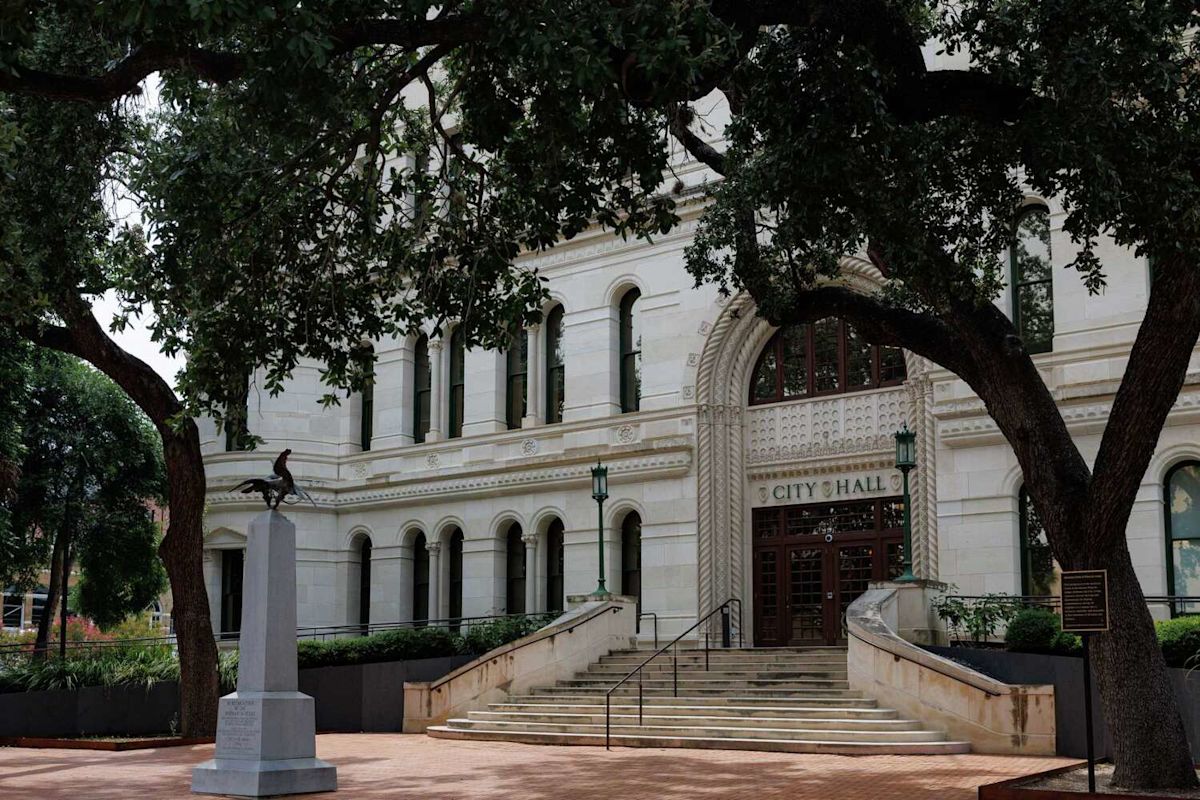
San Antonio municipal leaders are heading into a pivotal Thursday vote marked by intense political friction, as the City Council and Mayor Gina Ortiz Jones confront one of the most consequential fiscal decisions the city has faced in decades. Officials must determine whether to raise property tax rates for the first time in thirty years or implement severe service and personnel reductions to balance the city’s upcoming municipal budget.
The budget deliberations arrive during a period of escalating strain at City Hall, where internal relationships between the mayor and council members have deteriorated significantly. In the week leading up to the final votes, multiple council members took to social media platforms to highlight what they characterized as a systemic breakdown in municipal leadership, following contentious debates over financing land acquisitions for a new Spurs sports arena alongside other municipal initiatives.
At the core of the financial dispute is a looming two-year shortfall estimated at $158 million. As local officials work to establish a balanced $4.4 billion annual budget ahead of the mandatory Sept. 27 charter deadline, the governing body remains sharply split over which public programs should be preserved and which must be curtailed to stabilize municipal finances before the new fiscal year commences on Oct. 1.
City Manager Erik Walsh has presented an overarching blueprint designed to bridge the gap by blending departmental spending cuts with increased property revenue. His plan outlines $41 million in spending reductions for the approaching fiscal year, paired with a two-cent bump in the property tax rate. If adopted, the rate would climb to slightly more than 56 cents per $100 of assessed property valuation.
According to municipal fiscal analyses, the proposed rate adjustment would cost typical residential homeowners who possess standard homestead exemptions approximately $35 more per year in municipal property taxes. While city administrators argue the increase is modest, the idea of elevating the tax rate has encountered stiff philosophical and political resistance around the council dais.
Under Walsh’s initial $41 million reduction plan, the city would dismantle 101 municipal staff positions and entirely dissolve its former diversity, equity, and inclusion office. The proposed belt-tightening measures would also scale back financial grant allocations designated for external nonprofit organizations while placing stricter curbs on employee overtime compensation across city operations.
Enacting the proposed tax rate increase requires navigating stringent legislative hurdles under Texas state law. Because of the size of the proposed levy adjustment, the measure demands a 60% supermajority of the council to pass. In practical terms, Walsh's proposal requires seven affirmative votes to be approved, meaning a unified bloc of just five council members holds enough power to completely block the increase.
A vocal conservative bloc of three council members—Marina Alderete Gavito, Misty Spears, and Marc Whyte—has adamantly rejected any tax rate increase, insisting that city leadership must instead uncover deeper internal spending cuts. They maintain that raising property taxes would unnecessarily exacerbate the economic hardships endured by residents who are already grappling with rising costs for everyday essentials such as food and gasoline, alongside anticipated rate hikes from the San Antonio Water System.
Despite actively lobbying their council colleagues to form the five-vote coalition needed to defeat the tax adjustment, the opposing trio has yet to secure the additional two votes. Whyte acknowledged earlier in the week that efforts to recruit fellow council members to their anti-tax position had not yet yielded the support necessary to block the measure.
Conversely, council members Sukh Kaur, Phyllis Viagran, and Edward Mungia have publicly signaled their backing for the tax rate hike, aligning with a majority of council members who appear ready to adopt Walsh’s financial proposal. Viagran has emerged as the most outspoken proponent of the tax adjustment, framing the revenue measure as an essential investment in San Antonio's ongoing growth, while noting that she originally advocated for an even larger tax increase to prevent key public programs from landing on the chopping block.
The financial stakes tied to the upcoming vote remain substantial. Should the council choose to hold the tax rate flat by rejecting Walsh’s proposal, the city would be forced to absorb an additional $75 million in spending reductions across the next two years, including an immediate $31.2 million cut from the upcoming fiscal year's operational budget.
Such an outcome would trigger the elimination of an estimated 138 additional municipal jobs beyond the cuts already outlined in the base budget. Furthermore, officials warn that rejecting the new revenue would necessitate significantly harsher service reductions across San Antonio’s public library and municipal park networks.
The prospect of deeper service cuts ignited the most contentious debate of the budget cycle last month when Walsh outlined potential fallout scenarios. Representatives for San Antonio’s East, West, and South sides strongly condemned the anti-tax contingent, arguing that rejecting the rate hike demonstrated indifference toward lower-income neighborhoods that would be disproportionately harmed by diminished community services. In response, Alderete Gavito accused Walsh of manufacturing political friction by intentionally selecting visible, public-facing services for reductions rather than implementing internal administrative savings.
Attempts to negotiate a middle ground have gained little traction among council leadership. Councilwoman Ivalis Meza Gonzalez floated an alternative framework proposing a smaller tax rate increase than the one requested by Walsh. However, because her compromise would still leave the city needing to identify $13.4 million in spending cuts for the upcoming fiscal year, the concept failed to generate meaningful discussion during council briefings and was ultimately excluded from Walsh’s final list of proposed amendments.
With the Sept. 27 budget adoption deadline rapidly approaching, Walsh has clarified the procedural consequences of Thursday's vote. He warned council members that if they approve the general budget but vote down the corresponding property tax rate hike, his administrative team will be forced to independently execute the additional $31.2 million in departmental reductions without returning to the council for further votes.


(0)