
Historic properties throughout the state of Iowa are experiencing a major transition as aging infrastructure is being reimagined to address modern residential challenges. Across diverse communities, properties that once functioned as sacred halls, educational centers, and military installations are being systematically converted into affordable living spaces. This evolving architectural movement reflects a growing convergence between historic preservation efforts and the pressing demand for accessible residential options for local residents.
A diverse array of century-old and mid-century sites exemplifies this transformative wave. Among the notable undertakings is the comprehensive overhaul of a 102-year-old Catholic church and adjacent school facility situated in Waterloo. Simultaneously, in the state capital of Des Moines, developers have focused their attention on a former U.S. Army post dating back nearly 130 years, alongside a 69-year-old Lutheran church situated mere blocks from the Iowa State Capitol building.
While these landmarks were originally constructed to fulfill completely different civic, military, and spiritual mandates, they now share a unified trajectory. Rather than facing neglect, deterioration, or demolition, these distinct properties are being actively repurposed to expand the overall volume of affordable housing units available to individuals and families across the Hawkeye State.
The strategic push toward adaptive reuse is rooted in the state's unique demographic and infrastructural profile. According to data compiled and released by the Iowa Finance Authority, Iowa currently possesses the eighth-oldest housing stock in the United States. State figures indicate that the median year of residential construction across Iowa is 1957, underscoring the deep historical roots of the region's existing built environment.
Alongside its mature residential inventory, Iowa maintains a substantial volume of historic, vacant, and underused buildings. Decades of shifting community needs, institutional reorganizations, and urban migration have left numerous legacy facilities dormant. This extensive reservoir of unused real estate presents both a regional challenge and a unique urban planning opportunity.
In response to these conditions, property developers throughout the state are embracing innovative revitalization methods. Rather than concentrating solely on traditional ground-up new construction—which can be resource-intensive and land-demanding—builders are increasingly choosing to restore and repurpose existing building envelopes. This methodology allows developers to preserve neighborhood character while delivering essential housing units.
A prominent example of this adaptive reuse strategy is currently taking shape in Des Moines through the work of the organization Starts Right Here. The group is spearheading a specialized project titled "Stay," designed to integrate affordable residential accommodations with educational services tailored specifically toward supporting at-risk youth.
Spearheaded by Starts Right Here founder Will Keeps, the "Stay" initiative seeks to tackle housing instability among younger populations by providing secure living quarters paired with structured developmental programming. The project emphasizes that physical housing security is a foundational prerequisite for youth empowerment and educational advancement.
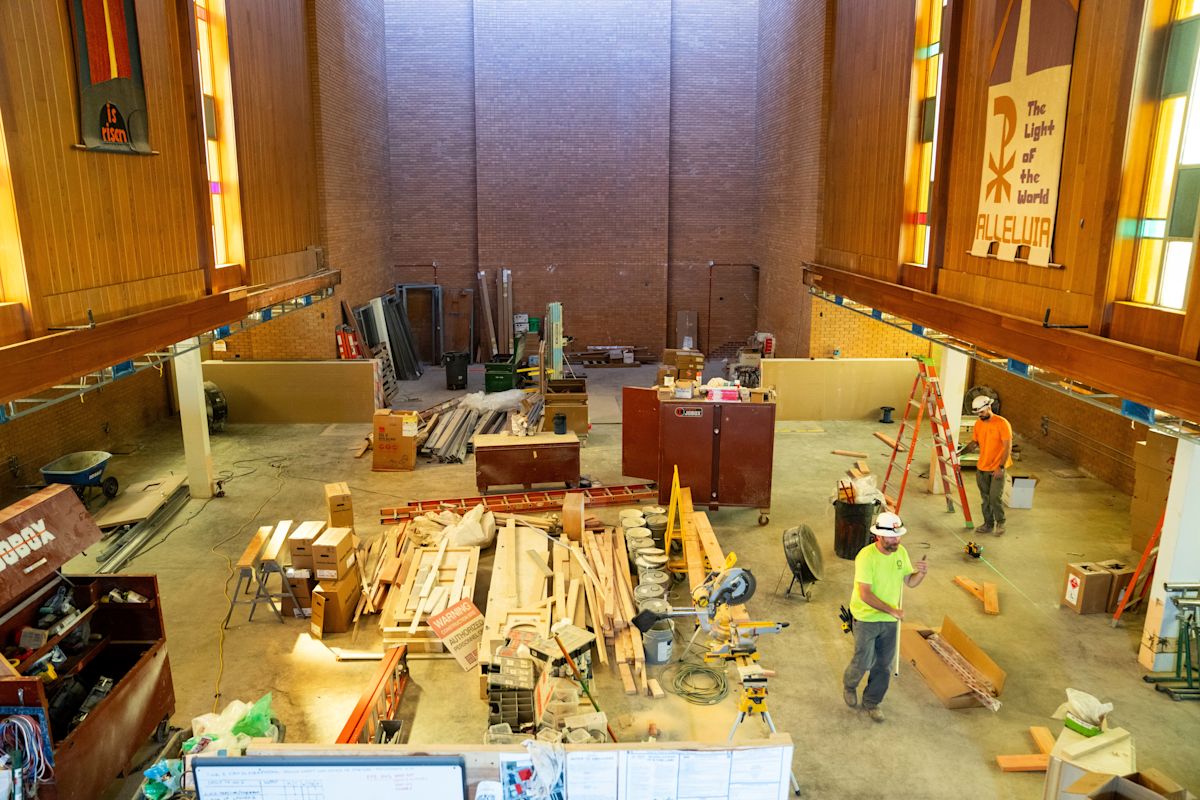
The physical foundation for the "Stay" development is the former site of Elim Christian Fellowship, a 69-year-old religious structure located just blocks away from the Iowa State Capitol. Originally built as a Lutheran church, the facility is undergoing an extensive structural and interior overhaul to transform former worship spaces and meeting halls into private living suites and communal education areas.
Progress on the Des Moines church conversion has advanced steadily, with substantial interior remodeling underway during late August 2026. Renderings and ongoing construction show the systematic partitioning of the historic sanctuary into dedicated residential units, creating a stable environment where vulnerable young residents can reside while accessing educational enrichment programs on-site.
The initiative demonstrates how specialized community organizations can salvage aging faith-based facilities that might otherwise sit empty. By transforming the former Elim Christian Fellowship property, the project ensures that a prominent mid-century landmark remains an active contributor to the civic well-being of the surrounding neighborhood.
Similar dynamics are unfolding at other adaptive reuse sites across Iowa. In Waterloo, the repurposing of the 102-year-old Catholic church and school complex preserves a century of local architectural heritage while introducing much-needed low-cost housing to the community. The scale of the property allows for a meaningful increase in local housing capacity within an established neighborhood framework.
Furthermore, the ongoing conversion of the nearly 130-year-old former U.S. Army post in Des Moines highlights the potential of repurposing large-scale historic military infrastructure. These late 19th-century installations, characterized by durable craftsmanship and expansive footprints, offer prime opportunities to create vibrant multi-unit housing without erasing the military history embedded in the capital city's landscape.
Together, these varied projects illustrate how Iowa is addressing modern social and residential challenges through the lens of architectural sustainability. By leveraging its historic properties, the state is demonstrating that solving the affordable housing deficit does not always require starting from scratch. Instead, the answers often lie within the sturdy walls of the state's historical landmarks.





(0)