
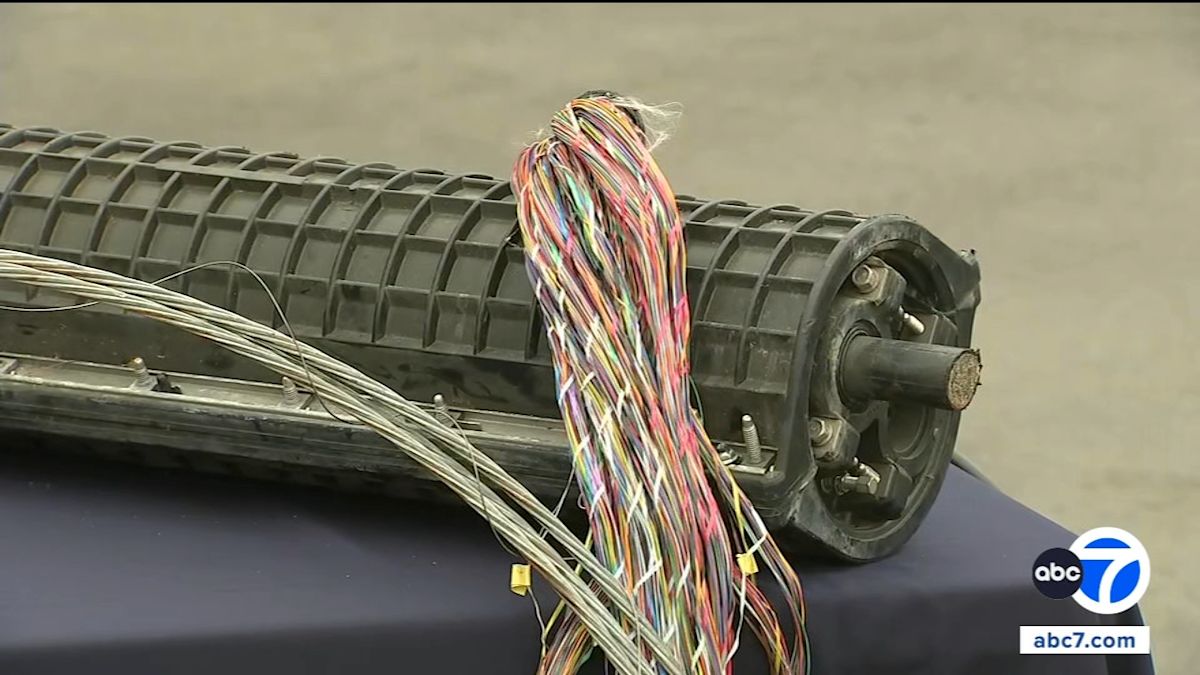
A surge in copper wire and metal thefts across Southern California has prompted an urgent call to action from municipal authorities, law enforcement agencies, and business organizations. A united coalition is formally appealing to California Governor Gavin Newsom to enact pending state legislation designed to penalize organized metal theft networks that have repeatedly compromised essential municipal infrastructure and public safety systems across the state.
The staggering magnitude of the crisis was recently brought to light through public records requests reviewed by investigative reporters. According to data from the Los Angeles Department of Water and Power, unauthorized individuals have stripped and stolen more than 27,000 feet of communications cable from the city's utility network over the course of the past year alone.
To put that volume into perspective, the stolen material amounts to roughly five linear miles of critical utility wiring. Stretched vertically into the atmosphere, this continuous line of wire would reach the cruising altitude of a typical commercial airliner. When measured across familiar ground distances, the stolen cable spans the equivalent of roughly 90 standard football fields or approximately 165 Olympic-sized swimming pools laid end to end.
The consequences of this pervasive metal pilfering extend far beyond the loss of raw materials. The recurring destruction has severed essential phone service lines and plunged entire roadways and public structures into darkness. When copper thieves rip out active electrical and communications wiring, neighborhoods are left without functional street lighting, creating immediate public safety hazards and disrupting essential communications links.
In response to the escalating damage, local political leaders, regional law enforcement personnel, and business representatives have banded together to support Assembly Bill 1941. The coalition is urging Governor Newsom to affix his signature to the measure, which advocates argue will supply the justice system with vital legal tools needed to disrupt coordinated metal stripping operations.
Under the provisions of AB 1941, the state would officially establish a distinct criminal offense classified as "organized metal theft." Proponents of the legislation aim to target the structured nature of modern scrap metal operations, which frequently involve organized rings working in tandem to extract, transport, and liquidate valuable infrastructure components.
The proposed statute specifically targets both sides of the illegal metal marketplace. Individuals who conspire together to physically dismantle and steal utility metal, as well as commercial operators and buyers who knowingly purchase the stolen property, could face penalties including up to one year of incarceration in county jail.
The legislative effort is spearheaded by Assembly Member Mark González, who represents portions of Los Angeles and serves as the author of AB 1941. González has maintained that existing statutory frameworks have proven insufficient to deter organized syndicates from exploiting municipal networks for quick financial gain.
During a public press briefing, González delivered a stern message to those involved in dismantling public assets, declaring that public infrastructure is not theirs to steal. He emphasized that the proposed bill gives prosecutors the legal leverage necessary to hold organized thieves accountable while preserving the reliability of systems that keep communities safe and connected.
González deliberately hosted the legislative briefing at Los Angeles' 6th Street Bridge, a location that has evolved into one of the most prominent regional symbols of the infrastructure theft epidemic. The landmark structure has been subjected to relentless scavenging by thieves seeking high-value electrical and lighting wires.
Because thieves have continually torn out the internal streetlight wiring powering the viaduct's illumination, the major thoroughfare has frequently been left shrouded in complete darkness after sunset. These persistent blackouts pose serious navigation and safety concerns for motorists, cyclists, and pedestrians traversing the prominent span at night.
The economic toll of this localized vandalism has placed an extraordinary strain on public coffers. According to figures shared by González, taxpayers have already been forced to spend an estimated $11 million simply to replace and repair the stolen wiring on the 6th Street Bridge alone, demonstrating the immense financial burden placed on local governments.
Similar problems have increasingly surfaced throughout other parts of Los Angeles and across various municipalities throughout California. Cities across the state are grappling with depleted repair budgets and disrupted communications networks as utility crews struggle to replace dismantled wiring as quickly as illicit rings remove it.
Advocates maintain that establishing criminal liability for the commercial buyers of illicit scrap metal is essential to curbing the problem. By penalizing both the physical thieves and the secondary market entities that purchase stolen materials, the legislation seeks to dismantle the economic incentives driving the theft of municipal communications and power assets.
Assembly Bill 1941 now sits before Governor Gavin Newsom for his consideration. As local officials, utility managers, and law enforcement agencies await the governor’s executive decision, they continue to stress that stronger statewide measures are vital to protect California's critical infrastructure from ongoing exploitation.





(0)