
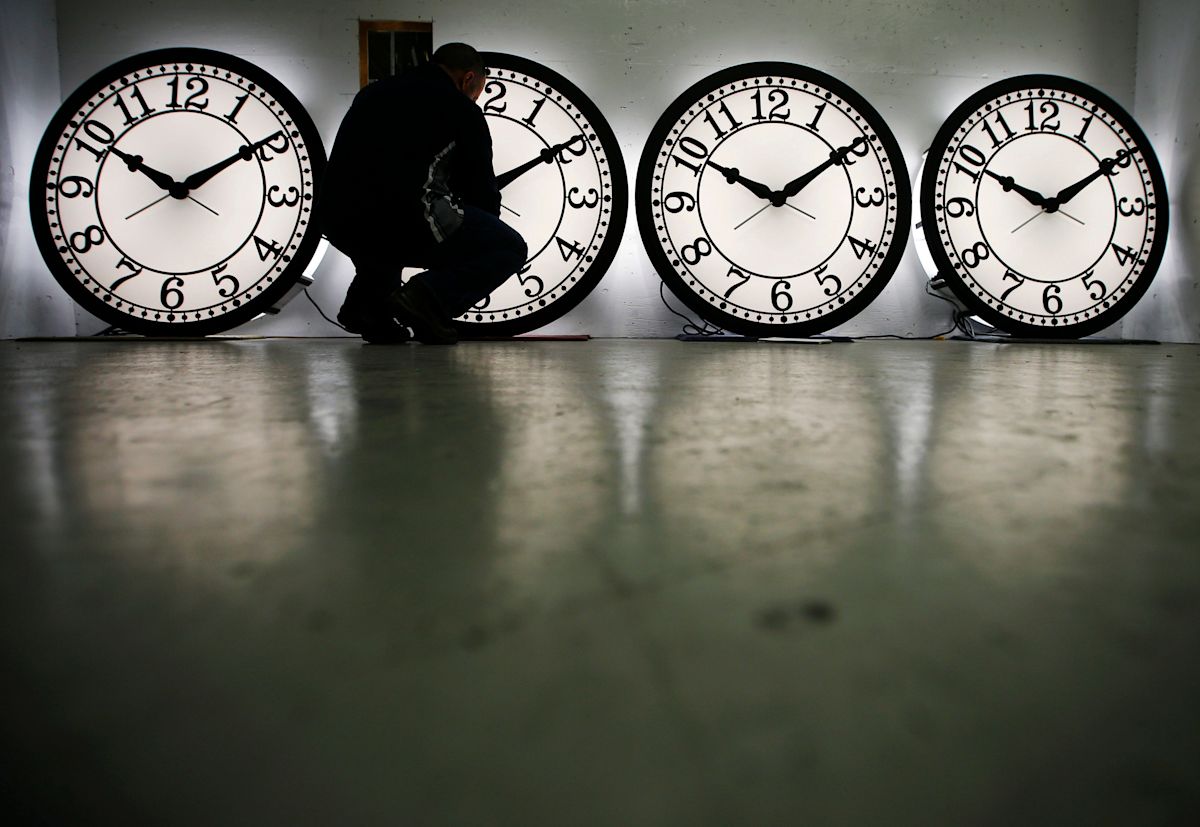
As autumn approaches, millions of Americans across the country are once again preparing to adjust their clocks for the end of daylight saving time. The annual routine will require households to turn their timepieces back by one hour, marking the return to standard time as the nation heads into the shorter, colder days of winter. However, this recurring seasonal adjustment arrives amid renewed political debate over whether the United States should abandon the practice entirely.
The upcoming shift is scheduled to take place in the early morning hours of Sunday, November 1. Specifically, at 2:00 a.m. local time, clocks will officially move backward one hour to 1:00 a.m. For most modern households, internet-connected equipment such as smartphones, laptops, smart televisions, and digital tablets will synchronize and update automatically overnight. Conversely, traditional wall clocks, microwave timers, oven displays, and vehicle dashboards will still require manual resetting by owners.
This autumn transition represents the traditional "fall back" phase of the calendar, offering residents an extra hour of sleep over the weekend. The seasonal adjustment stands in sharp contrast to the springtime ritual known as "spring forward," during which an hour of sleep is lost in exchange for extended evening daylight that persists through the summer months.
The practice continues to apply broadly across the nation, including in states like Mississippi. Situated within the Central time zone, Mississippi remains one of the many jurisdictions that actively participates in the biannual shift, following the federal framework established for alternating between standard and daylight saving time.
The twice-a-year ritual has faced sharp criticism from top political leaders, most notably President Donald Trump, who has repeatedly advocated for terminating the clock-changing system. Trump has actively pushed for a permanent resolution, arguing that the nation would benefit from establishing a single, unchanging schedule rather than disrupting daily routines every spring and autumn.
In an August 4 message published on Truth Social, Trump forcefully criticized the ongoing system, characterizing the twice-yearly time change as foolish, inconvenient, and burdensome. He stressed that everyday Americans have grown weary of continually having to adjust their schedules, sleep patterns, and household devices, urging lawmakers to bring an immediate end to the biannual switch.
The president has voiced support for locking the country permanently into daylight saving time rather than standard time. According to Trump, establishing permanent daylight saving time would offer substantial societal benefits, including lowering crime rates, decreasing traffic accidents, conserving energy, and providing American families with extra daylight hours to enjoy during late afternoons and evenings. He urged federal lawmakers to swiftly approve the Sunshine Protection Act to lock the current schedule in place permanently.
Under the current legal structure, any permanent alteration to how the nation observes daylight saving time requires explicit approval from the United States Congress. Individual states do not possess unilateral federal authority to mandate national shifts without corresponding congressional legislation.
Legislative efforts to eliminate the biannual transition have gained notable momentum in the legislative branch, where the House of Representatives has already passed the Sunshine Protection Act. The proposed legislation seeks to mandate daylight saving time on a permanent basis nationwide. Other related legislative proposals introduced in Congress have suggested alternative routes, such as granting individual states the authority to decide independently whether to maintain seasonal shifts or adopt permanent time standards.
Despite the House's approval and direct encouragement from the White House, the measure remains stalled in the upper chamber. The Senate officially returned to Washington on September 14 following a five-week recess, but leadership did not schedule an immediate vote on the Sunshine Protection Act. Without full Senate passage and the president's signature into law, the existing federal mandate remains in effect, requiring the nation to proceed with the scheduled November time change.
If permanent daylight saving time were eventually signed into law, the shift would not physically increase the total number of daylight hours available in a day. Instead, it would structurally reposition those hours later on the clock, resulting in later morning sunrises and extended evening light throughout the winter months. Proponents have historically argued that shifting sunlight toward the evening reduces overall energy demand and optimizes daylight for commerce and recreation.
Conversely, medical and sleep specialists have raised serious concerns about the health implications of clock adjustments. A growing number of health experts contend that alternating back and forth twice a year places unnecessary stress on the human body, fundamentally disturbing its natural internal rhythm.
Erik Herzog, a professor of biology and neuroscience at Washington University in St. Louis and a former president of the Society for Research on Biological Rhythms, has noted that permanent standard time—rather than permanent daylight saving time—would represent the healthiest framework for the human body. Herzog explained that shifting clock times fundamentally disrupts circadian rhythms, which function as the internal biological mechanism regulating human sleep cycles, hormonal balance, and other vital functions.
Researchers note that the springtime adjustment, which strips away an hour of rest, is particularly harmful to public health. The sudden loss of sleep and circadian misalignment associated with the spring change have been directly linked to noticeable spikes in cardiovascular emergencies, including heart attacks, as well as an increase in fatal motor vehicle accidents.
The United States has briefly experimented with ending clock adjustments in the past. In 1974, the federal government enacted a policy that implemented year-round daylight saving time, providing historical precedent for modern legislative efforts to halt the seasonal shifts.
For the time being, however, the lack of definitive congressional action means the long-standing calendar routine persists. Unless lawmakers rapidly take up and pass the pending legislation before November, Americans across the country must prepare to turn their clocks back one hour on November 1.


(0)