
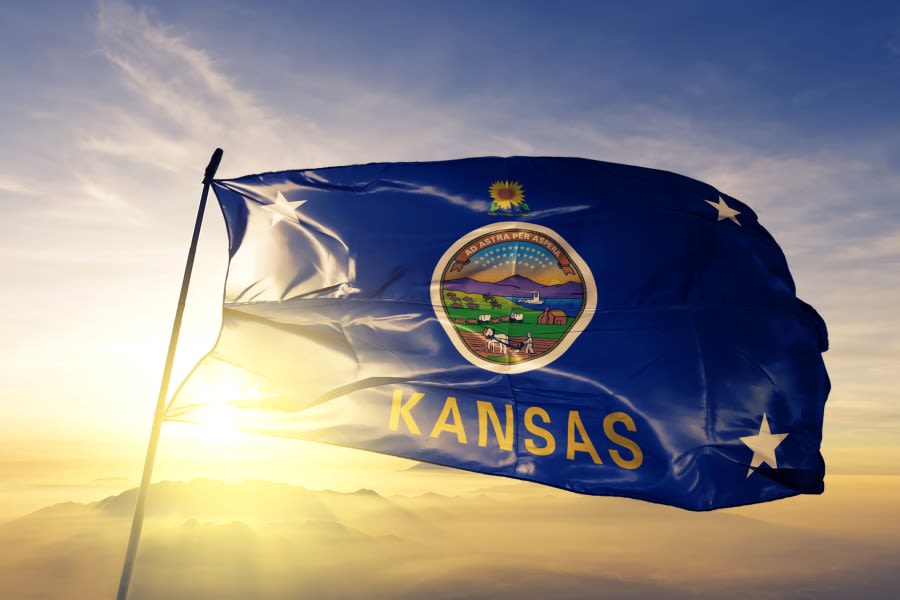
A long-standing belief among many residents of Kansas is that their everyday speech is completely neutral and devoid of any recognizable regional inflection. However, linguists at the University of Kansas are challenging that widespread perception, demonstrating that Kansas speech is distinct, multifaceted, and perceived very differently depending on where a listener calls home.
The findings come from a research initiative spearheaded by Jeff Holliday and Lacey Wade, both assistant professors of linguistics at the University of Kansas. Their findings were recently published in the scholarly journal American Speech under the title, "What does Kansas speech sound like? It depends who you ask." The study delves into the linguistic identity of the Sunflower State and exposes the sharp divide between how Kansans perceive themselves and how the rest of the nation hears them.
Both researchers began investigating the topic shortly after relocating to Kansas to teach linguistics. Upon arrival, they repeatedly encountered locals claiming that the state lacked any distinctive vocal traits. Holliday noted that such assumptions run contrary to fundamental linguistic science, emphasizing that every person possesses an accent regardless of where they reside or how standard they believe their speech sounds.
To analyze how people identify Kansas voices, the research team conducted an experiment involving 64 participants from across the United States. During the study, these participants were asked to listen to dozens of audio samples featuring speakers with varying regional accents. Each participant then evaluated and rated how likely it was that a given speaker originated from Kansas.
The experimental data revealed a striking divergence in perception between local Kansans and participants living outside the state. When Kansas residents evaluated the audio samples, there was a pronounced correlation between what they considered "unaccented" speech and what they identified as a genuine Kansas voice. The voices that locals perceived as having the least noticeable accent were routinely judged as being the most typically Kansan.
According to Wade, this reaction directly reinforces the entrenched myth among Kansans that their local dialect represents a completely neutral baseline. When locals heard voices that sounded natural and familiar to their own ears, they assumed those speakers must be from Kansas, equating familiarity with an absence of an accent.
In contrast, listeners from other parts of the country had a completely different perception of what a Kansan sounds like. Out-of-state participants frequently attributed strong, Southern-sounding accents to Kansas speakers. Despite Kansas not being part of the American South, non-residents routinely selected voices with heavy Southern features as their prime candidates for native Kansans.
To determine whether this misattribution was simply caused by geographical ignorance, the researchers integrated a geography assessment into their experiment. Participants were presented with a blank outline map of the United States and asked to correctly place Kansas within the borders.
The results of the mapping task demonstrated that the vast majority of participants knew precisely where Kansas is located on the map. This outcome eliminated the possibility that outsiders simply confused Kansas with a Southern state, presenting the researchers with a deeper sociolinguistic puzzle.
Holliday explained that because participants demonstrated accurate geographical knowledge yet still associated the state with Southern vocal patterns, the concept of sounding Southern transcends strict geographic boundaries. Instead of relying on regional borders, outsiders appear to rely on broad cultural associations.
Because many people outside the region have limited direct experience with Kansas speech, they tend to extrapolate based on the limited knowledge they have, specifically associating Kansas with rural culture. The researchers determined that non-Kansans frequently link rural lifestyles with Southern linguistic traits, projecting those vocal features onto Midwestern and Plains communities.
The research also emphasizes that speech within Kansas is far from uniform. Due to the state's substantial geographic span and strategic central location, there is considerable linguistic variation from one border to another. Linguistic boundaries rarely follow straight state lines, meaning eastern Kansans frequently share phonetic features with residents of neighboring Missouri, while western Kansans exhibit different acoustic nuances.
Wade noted that regional geography is only one factor shaping how Kansans talk. A speaker's immediate environment—whether they grow up in an urban center, a suburban neighborhood, or a rural farming town—substantially impacts their cadence, vowel pronunciation, and dialect.
These vocal choices reflect not just geographic location, but also an individual's identity, social background, and personal connection to their surrounding community. Language patterns serve as a dynamic marker of social positioning within everyday life rather than a static regional label.
The study represents one phase of a broader ongoing project dedicated to mapping and documenting the true complexity of Kansas speech. Holliday expressed hope that the work will dispel the notion held by outsiders that Kansas is merely an undifferentiated space in the middle of the country, illustrating instead that the state possesses an active, culturally rich, and linguistically diverse population.
The research team is actively seeking additional participants to expand their research database. Any native Kansan who is at least 8 years old is invited to contribute to the ongoing sociolinguistics initiative by reaching out to the researchers via email at kusociolab@gmail.com.





(0)