
The United States Supreme Court has intervened to halt an eleventh-hour initiative by the Trump administration aimed at overhauling mail-in voting procedures, issuing a 7-2 decision that stops the United States Postal Service from enforcing restrictive new delivery rules ahead of the upcoming midterm elections.
Under the contested postal rule introduced last month, postal workers would have been directed to withhold delivery of mail-in ballots unless they were processed through newly created, untested registration systems. The administration had claimed the mandate was intended to increase the visibility of Federal Ballot Mail to monitor for potential election fraud, even though widespread voter fraud remains unsubstantiated in American elections.
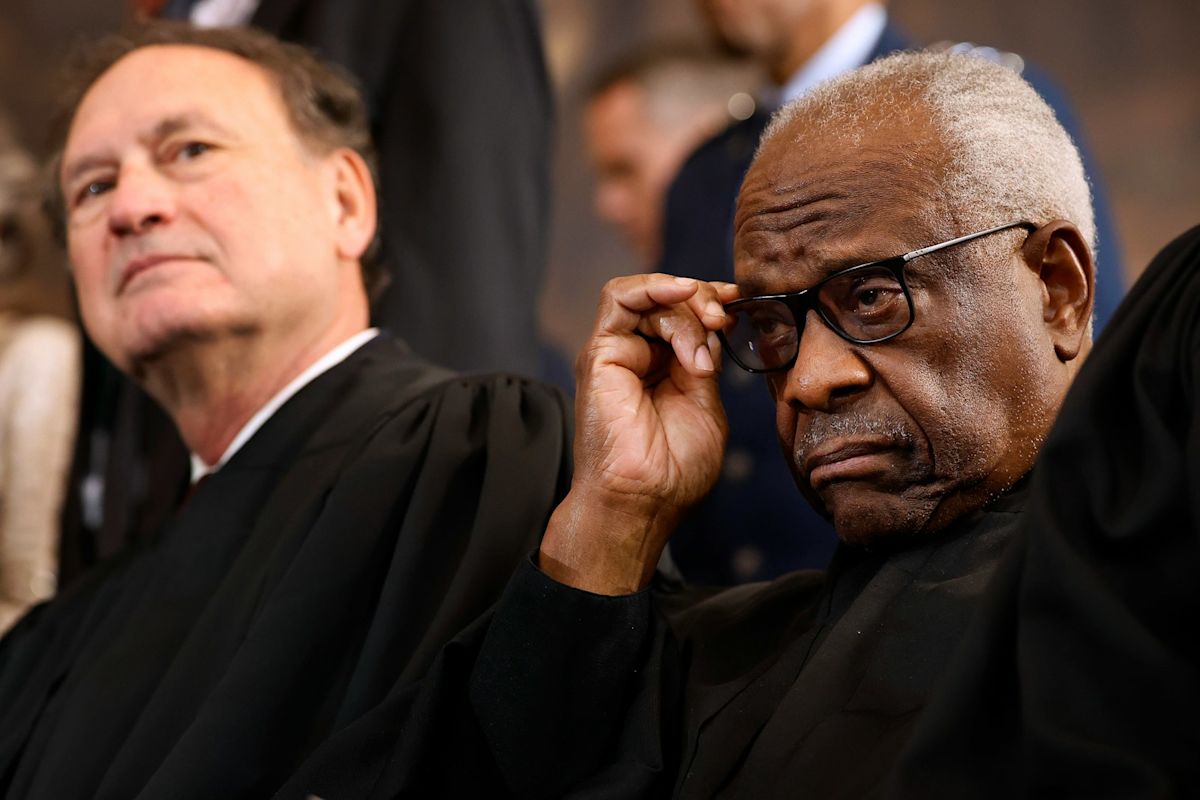
The high court’s brief, unsigned order leaves in place a lower court's preliminary injunction against the postal directive. While a broad majority of the justices voted to block the measure, Justices Clarence Thomas and Samuel Alito dissented, signaling their willingness to let the administration's postal mandates take effect.
In a concurring opinion, Justice Brett Kavanaugh aligned with the majority to halt the rule for the immediate contest but suggested an openness to allowing similar postal regulations in future election cycles. Despite the decisive margin of victory for the challenging states, legal analysts noted alarm that two justices fully backed the policy and a third indicated future receptiveness.
The entirety of the high court’s substantive ruling spanned just three sentences, offering minimal commentary. The order plainly asserted that the federal government was unlikely to prevail on the legal merits of its challenge against the district court's injunction, adding that the applicable equitable considerations did not justify granting an emergency stay.
This brevity stood in stark contrast to the court's actions just a month earlier when it initially examined an executive order related to the policy. At that time, the justices published an unsigned ten-page opinion heavily criticizing the challengers' lawsuits on procedural and standing grounds, characterizing the dispute as an impermissible intrusion into the internal deliberations of the executive branch.
That procedural stance had emerged despite public declarations from Donald Trump on his personal social media platform, where he openly proclaimed his ambition to abolish mail-in voting. Observers noted that the administration's intent to overhaul voting methods was publicly apparent regardless of how internal government processes were characterized.
State election directors and local administrators across the nation had strongly cautioned that implementing the postal agency's system on such short notice would trigger administrative pandemonium and risk widespread disenfranchisement. Because millions of ballots and return envelopes were already being printed, election offices lacked the necessary time, staff, and budget to restart their preparations.
The reach of mail voting in the United States underscores the potential scale of the disruption. Approximately one in three American voters cast their ballots by mail during the 2024 elections, and several states now conduct their voting processes almost entirely through the postal system.
State officials argued that the administration’s directive was effectively an unprecedented federal takeover of decentralized election administration. For the first time in the nation's history, local and state voting operations would have found substantial portions of their infrastructure placed directly under the control of a federal agency.
In their arguments before the Supreme Court, California and a coalition of plaintiff states strategically framed their challenge using the major-questions doctrine—a conservative legal standard frequently utilized by the court to curb expansive federal agency regulations enacted under broadly phrased statutory mandates.
The states highlighted that federal law contains no statutory authorization allowing the Postal Service to withhold the delivery of election materials. To bolster their case, plaintiffs pointed out that Congress had already established an exhaustive list specifying exactly what items the postal agency is permitted to reject, and election ballots are notably absent from that statutory register.
Challengers supported their petition by referencing prior landmark cases where the Supreme Court's conservative majority invoked the major-questions doctrine to strike down executive policies, including the Biden administration's student loan cancellation program and workplace COVID-19 testing mandates, as well as Obama-era emission limits for power plants. The states argued that the political weight of the postal voting rule matched or exceeded the significance of those previous matters.
In resolving the emergency petition, the court weighed the legal merits alongside the balance of equities, evaluating which party would suffer greater harm if an emergency stay were granted. The justices ultimately concluded that the threat of disrupting an imminent national election outweighed the administration's arguments.
Although the ruling provides immediate certainty for state officials preparing for November, the split on the bench highlights ongoing legal battles surrounding executive authority over election administration. The willingness of multiple justices to entertain the USPS's authority suggests that the debate over federal oversight of mail-in voting may re-emerge in future campaigns.
For now, election administrators nationwide can continue distributing and receiving mail-in ballots under their established procedures, ensuring that tens of millions of eligible voters will not face sudden barriers when casting their votes in the midterm elections.




(0)