
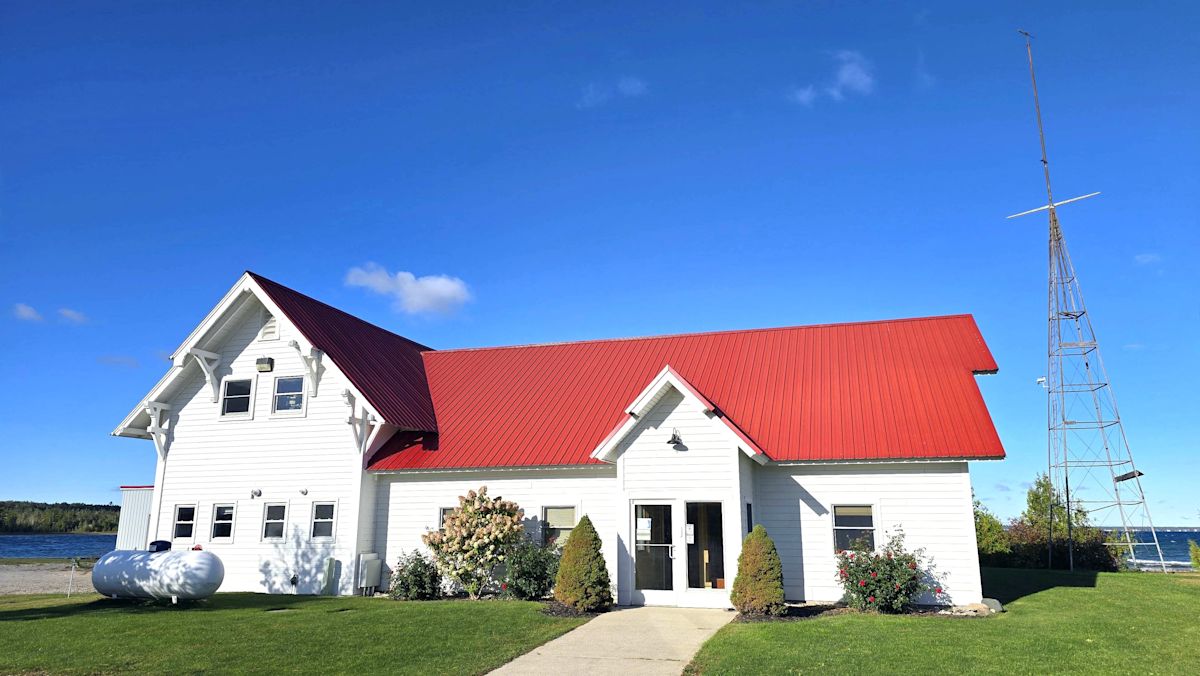
A historic maritime and scientific installation on the shores of northeastern Lake Huron is preparing to celebrate a century and a half of continuous service to the region and the nation. The Hammond Bay Biological Station will formally mark its 150th anniversary on Sept. 30 with a series of public events, including guided laboratory tours in Millersburg and an evening historical presentation in Rogers City.
According to a community announcement detailing the event, the sesquicentennial milestone honors an institutional evolution spanning 150 years. Over the course of its existence, the facility has adapted across different eras of Great Lakes history, transforming from a critical 19th-century maritime rescue base into a specialized center for essential fisheries research and aquatic conservation.
The anniversary festivities are scheduled to kick off on the afternoon of Sept. 30 at the biological station's primary facility, located at 11188 Ray Road in Millersburg. The station will welcome members of the public for scheduled guided walkthroughs slated for 1 p.m., 2 p.m., and 3 p.m., offering attendees a firsthand look at the facility's ongoing scientific operations.
Due to operational capacity, organizers noted that space for each tour session will be strictly limited, making advance registration mandatory for anyone wishing to attend. Community members interested in securing a reservation can register by sending an email to msigmon@glfc.org or by calling 989-734-4768, extension 112.
Following the afternoon tours, the celebration will move to nearby Rogers City for an evening program examining the installation's past and future. The second portion of the event will begin at 6 p.m. inside the Rogers Theater, located at 257 N. 3rd St., where community members, researchers, and local leaders will gather to reflect on the station's deep historical footprint.
The evening proceedings will open with introductory and welcoming remarks delivered by Marc Gaden, executive secretary of the Great Lakes Fishery Commission, alongside Lauren Holbrook, a communications associate representing the Hammond Bay Biological Station. Their opening remarks will set the stage for an in-depth retrospective on the station's contributions to the region.
A panel of featured speakers will subsequently address the audience at the theater, offering perspectives spanning civic history and aquatic biology. The scheduled speakers include former Rogers City Mayor Beach Hall, Hammond Bay Biological Station science communication specialist Andrea Miehls, and station supervisor Nick Johnson, each discussing the facility's heritage and its contemporary research initiatives.
The biological station's origins date back to 1876, when the facility was originally established as a U.S. Life-Saving Service station along Michigan's northeastern Lake Huron shoreline. During this foundational period, the post played an indispensable role in assisting mariners navigating waterways renowned for dangerous and unpredictable conditions.
In the late 19th century, Lake Huron presented formidable hazards to commercial and passenger vessels, with severe weather and rough waters frequently placing maritime crews in peril. The dedicated lifesavers stationed at Hammond Bay served as a crucial safeguard along the coast, carrying out hazardous rescue operations to protect human life.
The facility's operational role experienced its first major institutional transition in 1915, when the property became part of the newly established U.S. Coast Guard. Under Coast Guard administration, the station maintained its maritime safety presence, continuing to monitor shoreline waters and support sailors for the next several decades.
A second transformative shift occurred in 1950, when the site was officially converted into the Hammond Bay Biological Station. This transition redirected the facility away from maritime rescue duties and established it as a dedicated center for fisheries science, focusing on emerging ecological challenges in the Great Lakes.
Central to the station's scientific mission was the development and implementation of methods to control invasive sea lampreys. The destructive parasitic species had severely impacted native fish populations throughout the Great Lakes basin, creating an urgent need for targeted biological research and intervention.
Over the decades that followed its 1950 conversion, research conducted at the Hammond Bay station has proven vital to managing sea lamprey populations. According to the announcement, these ongoing scientific efforts have provided critical support for the broader restoration and protection of Great Lakes fisheries.
Event organizers emphasized that the upcoming anniversary observance is designed to recognize the station's long record of public service and its lasting connection to the Great Lakes and surrounding communities. The event highlights how a local facility has made enduring contributions to maritime history and ecological stewardship.
By inviting the public to tour its facilities and take part in the Rogers City presentation, the Hammond Bay Biological Station looks back on 150 years of heritage while looking ahead to its continuing role in scientific research, conservation, and the long-term health of the Great Lakes.





(0)