
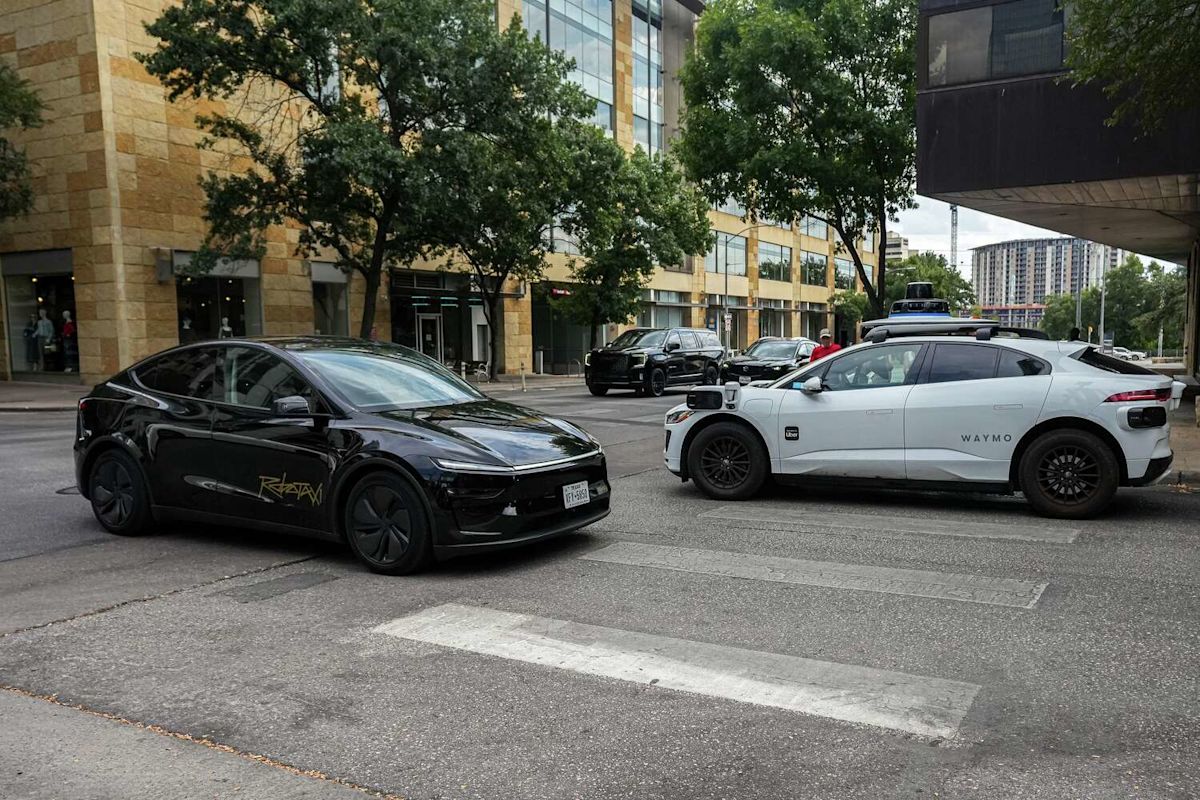
Federal safety regulators have documented a notable surge in autonomous vehicle collisions across Texas, with Austin recording multiple incidents as prominent technology and automotive corporations aggressively scale their driverless fleets. The latest regulatory disclosures highlight the emerging challenges of integrating commercial robotaxis onto public streets alongside pedestrians, human-driven automobiles, and cyclists.
According to the latest four-week reporting period tracked by the National Highway Traffic Safety Administration ending August 17, Texas logged 22 autonomous vehicle crashes statewide. Austin served as a major focal point for these roadway encounters, accounting for eight of the reported incidents during the monthly timeframe.
The concentration of collisions aligns with a pronounced surge in autonomous vehicle deployment throughout the Lone Star State. Ahead of introducing its dedicated Cybercab model, Tesla Inc. expanded its Texas operational footprint to 439 registered autonomous units. Simultaneously, Alphabet Inc.’s autonomous driving subsidiary, Waymo, expanded its presence by pushing its statewide fleet total to nearly 1,000 vehicles.
Among the eight Austin incidents, one collision prompted an on-site investigation by the Austin Police Department after an electric bicycle rider suffered minor injuries. According to safety filings submitted to federal regulators by autonomous operator Avride, the crash occurred when an e-biker traveling the wrong way down a two-way street lost control and slid directly into the side of an Avride vehicle.
The collision added to the local track record of Avride, which operates a localized fleet of 344 specialized Hyundai Ioniq 5 models. Following the bicycle incident, the company’s cumulative crash count in the Texas capital rose to 27 since regulatory monitoring protocols took effect.
Tesla also added to the capital city's collision tally after one of its autonomous vehicles struck a stationary metal bollard and connected chain fence. That single-vehicle collision pushed Tesla’s overall accident history in Austin to 23 recorded events since June 2025, highlighting ongoing difficulties in navigating static roadway obstacles.
Waymo accounted for the largest share of recent Austin incidents, reporting five distinct collisions within the four-week evaluation window. The new filings raised Waymo’s cumulative Austin incident record to 135 crashes since June 2025, representing the highest total among all autonomous driving operators operating within the municipality.
Filings submitted to federal regulators revealed that Waymo’s recent Austin mishaps involved varying urban driving scenarios. Several occurred when human-operated vehicles improperly merged into the robotaxi's active travel lane. In another case, a reversing municipal garbage truck backed directly into a stationary Waymo, while an independent incident saw a driverless vehicle sustain undercarriage damage while traversing a sharply sloped parking lot exit.
In contrast to its larger rivals, Amazon Inc.’s autonomous subsidiary, Zoox, maintained an unblemished safety ledger during the evaluated period. The company reported zero new collisions among its localized Austin fleet of 44 vehicles, leaving its cumulative incident total steady at three since federal oversight tracking commenced.
Across the wider state, autonomous vehicle activity generated mixed outcomes across major urban centers. Safety data showed that Houston recorded four robotaxi crashes during the four-week window, while the combined metropolitan area of Dallas and Arlington registered 10 collisions. Operators such as Nuro and May Mobility, the latter functioning in tandem with ride-hailing company Lyft, contributed to the collision tallies outside of Austin alongside Waymo and Avride.
San Antonio stood out as the only major metropolitan testing ground to report zero autonomous collisions in the recent dataset. However, the absence of incidents stems from an ongoing operational freeze; Waymo suspended its local driverless operations after one of its autonomous passenger vehicles was swept away by dangerous floodwaters during severe weather in April.
The regulatory reporting period was also marked by a fatal incident in North Texas, representing the only autonomous-involved fatality recorded in the state since June 2025. In Dallas, a Waymo vehicle initiated a deceleration maneuver after detecting a pedestrian in the roadway, moments before a conventional, human-operated sport utility vehicle struck the individual.
The force of the initial impact propelled the 71-year-old pedestrian, identified as Juan Guzman, into the rear left quarter of the Waymo vehicle. Guzman was transported to a regional medical facility, where he subsequently succumbed to his injuries.
Local law enforcement confirmed that the driver of the human-operated SUV remained at the crash site to assist investigators. Dallas police authorities have announced no criminal charges or arrests in connection with the incident, and an inquiry into the exact circumstances of the collision remains open.
Federal records show that fatal incidents involving autonomous transport remain exceptionally rare. Outside of the Dallas collision, only one other fatality has been entered into the federal autonomous vehicle crash database since June 2025. That prior incident occurred in Tempe, Arizona, when a motorcycle struck a slowing Waymo vehicle, throwing the rider into an adjacent lane where they were hit by oncoming vehicular traffic.
As autonomous vehicle technology companies continue to invest heavily in Texas transportation infrastructure, federal and municipal regulators are closely analyzing accident data to evaluate how expanding commercial fleets navigate mixed-traffic corridors. The findings reflect both the operational scale of robotaxi programs and the continuous hurdles of coexisting with human drivers, pedestrians, and cyclists.





(0)